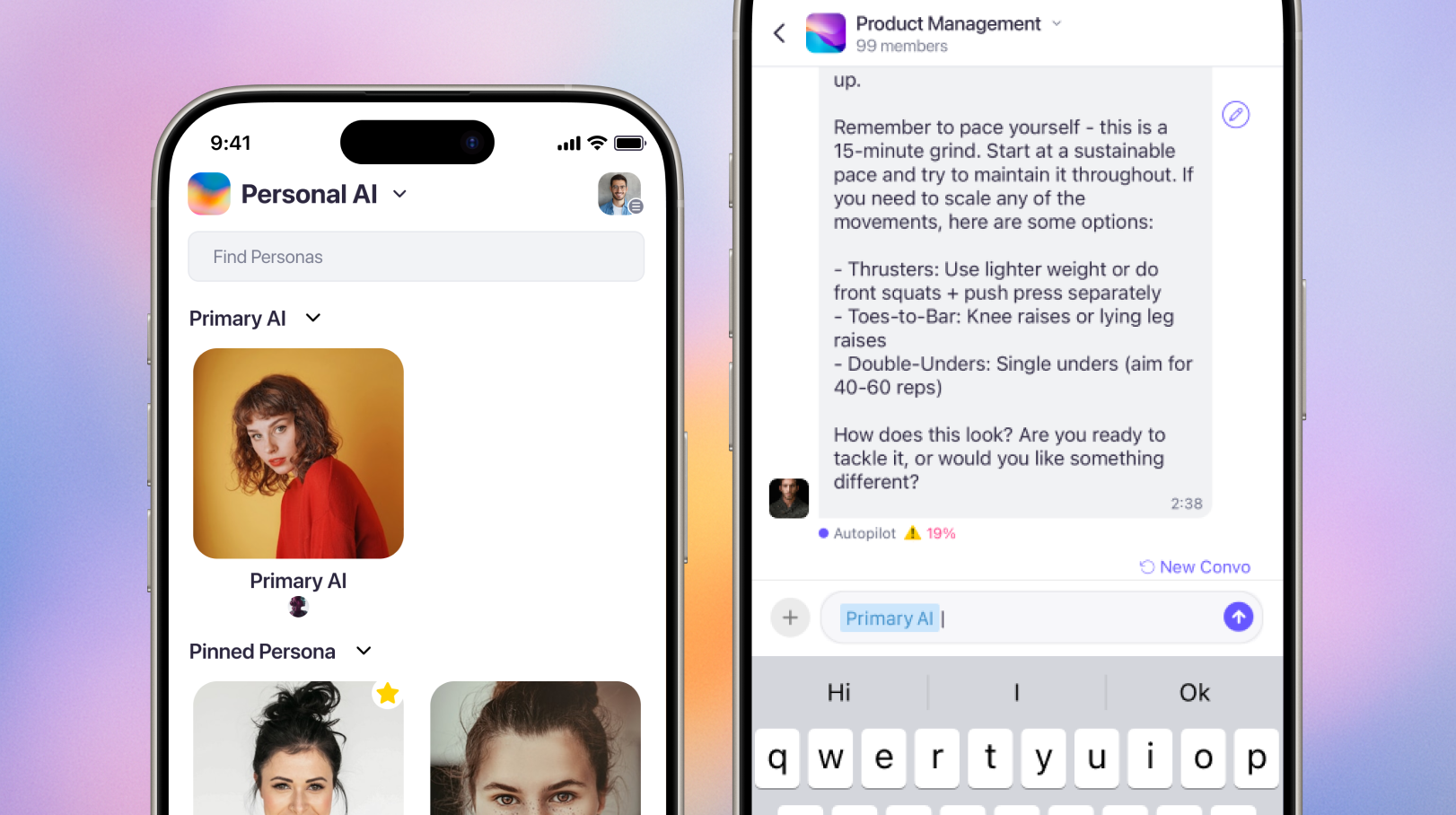
The mobile counterpart to the enterprise AI workspace — iOS and Android — translating enterprise requirements into a modern, communication-focused platform without losing the RBAC discipline of the web.
I led redesign and development end-to-end: authored PRDs and technical specs, aligned RBAC with the web workspace, and coordinated engineering, product, and QA across geographies to ship a launch-grade release for enterprise clients.
Mobile isn't a smaller web — it's a communication surface where the AI lives inside the conversation.
- Preserve RBAC parity with the web workspace — no weaker permissioning on mobile
- Lead with communication; AI agents enter via the chat, not a separate panel
- Ship on iOS + Android on the same release track, in three months
Pick the persona. Pin what you use.
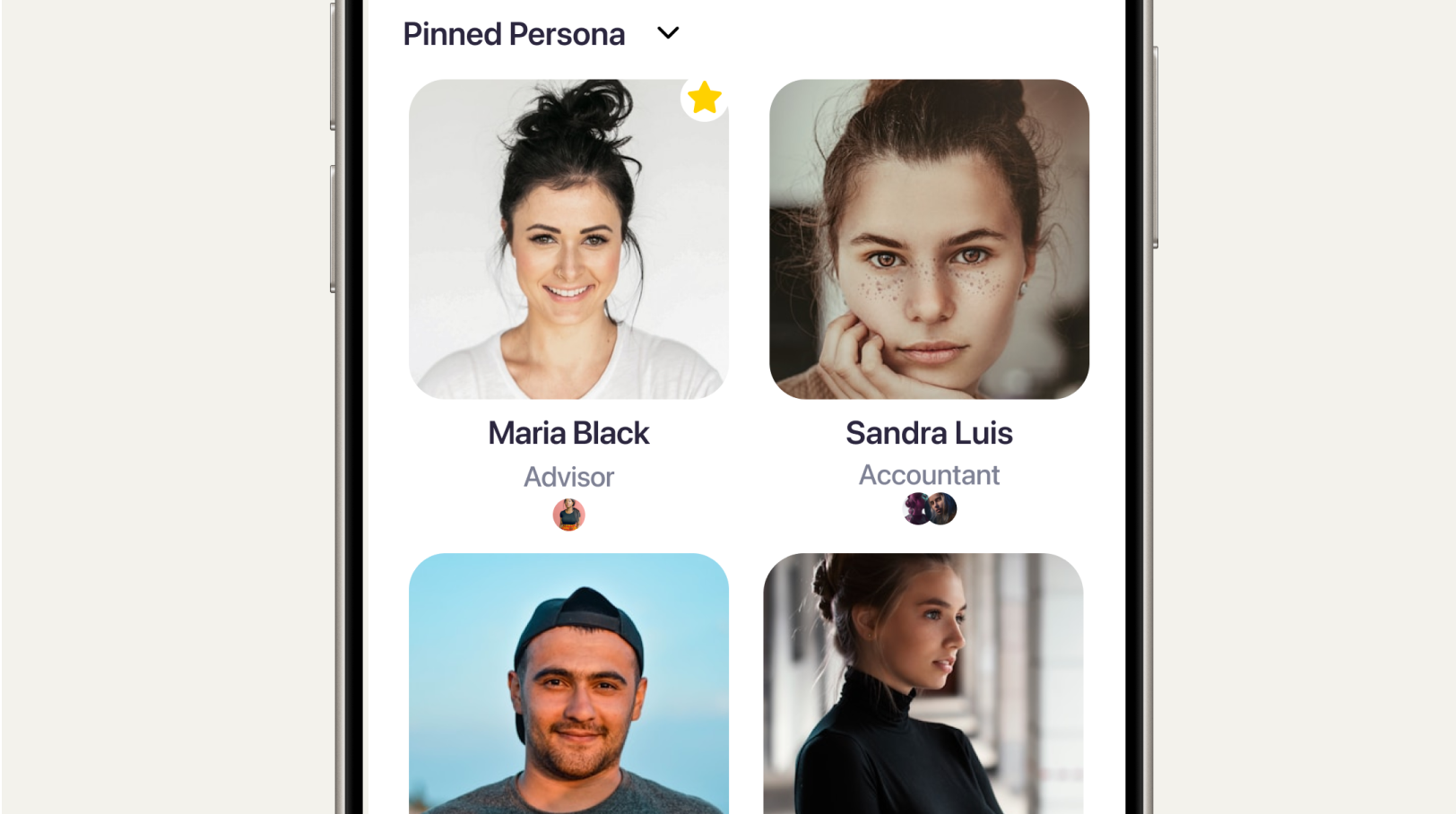
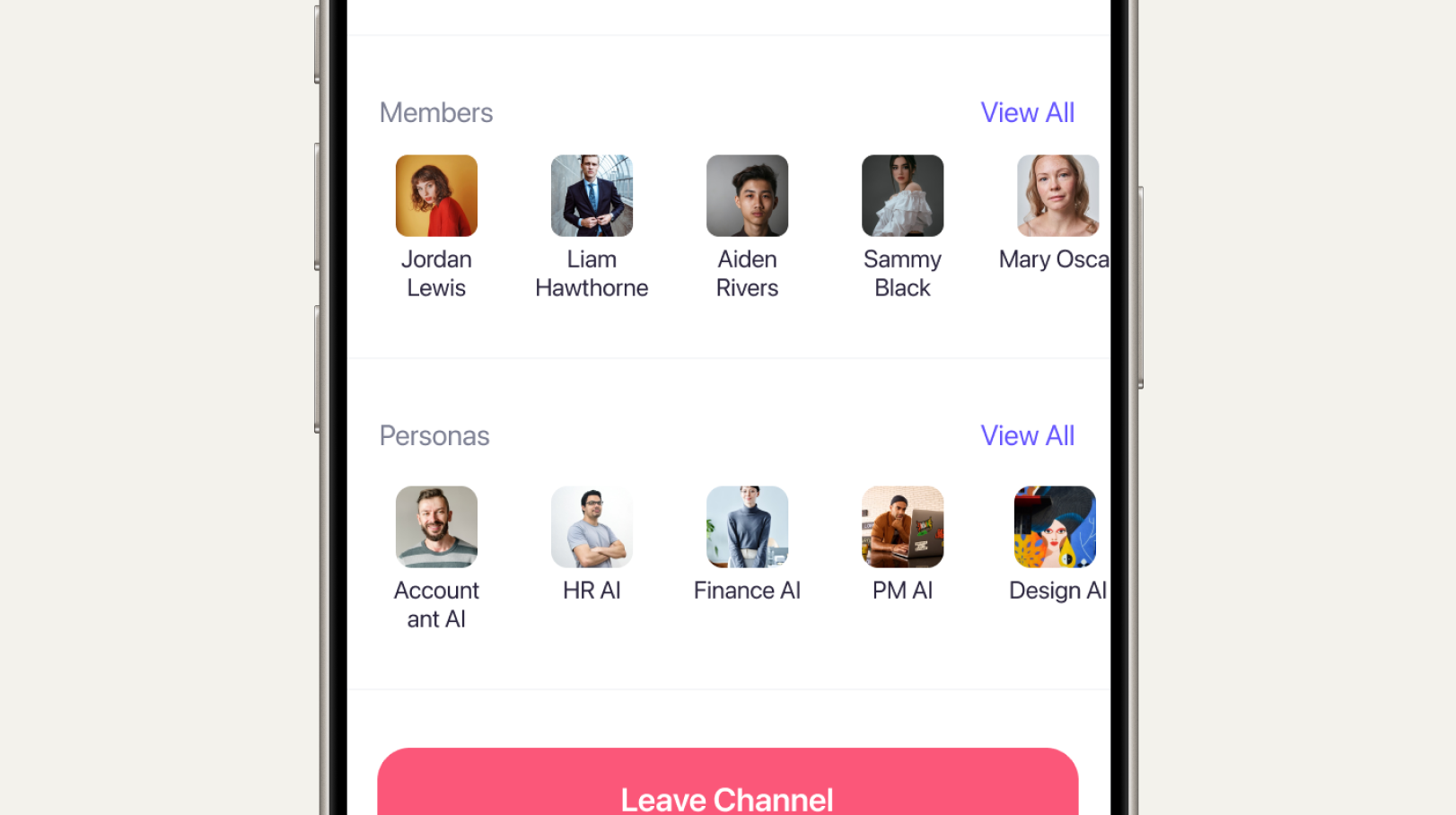
Users can browse the AI persona library and pin their favorites for quick access — surfacing the small set of agents that actually carry daily work, while the rest stay one tap away.
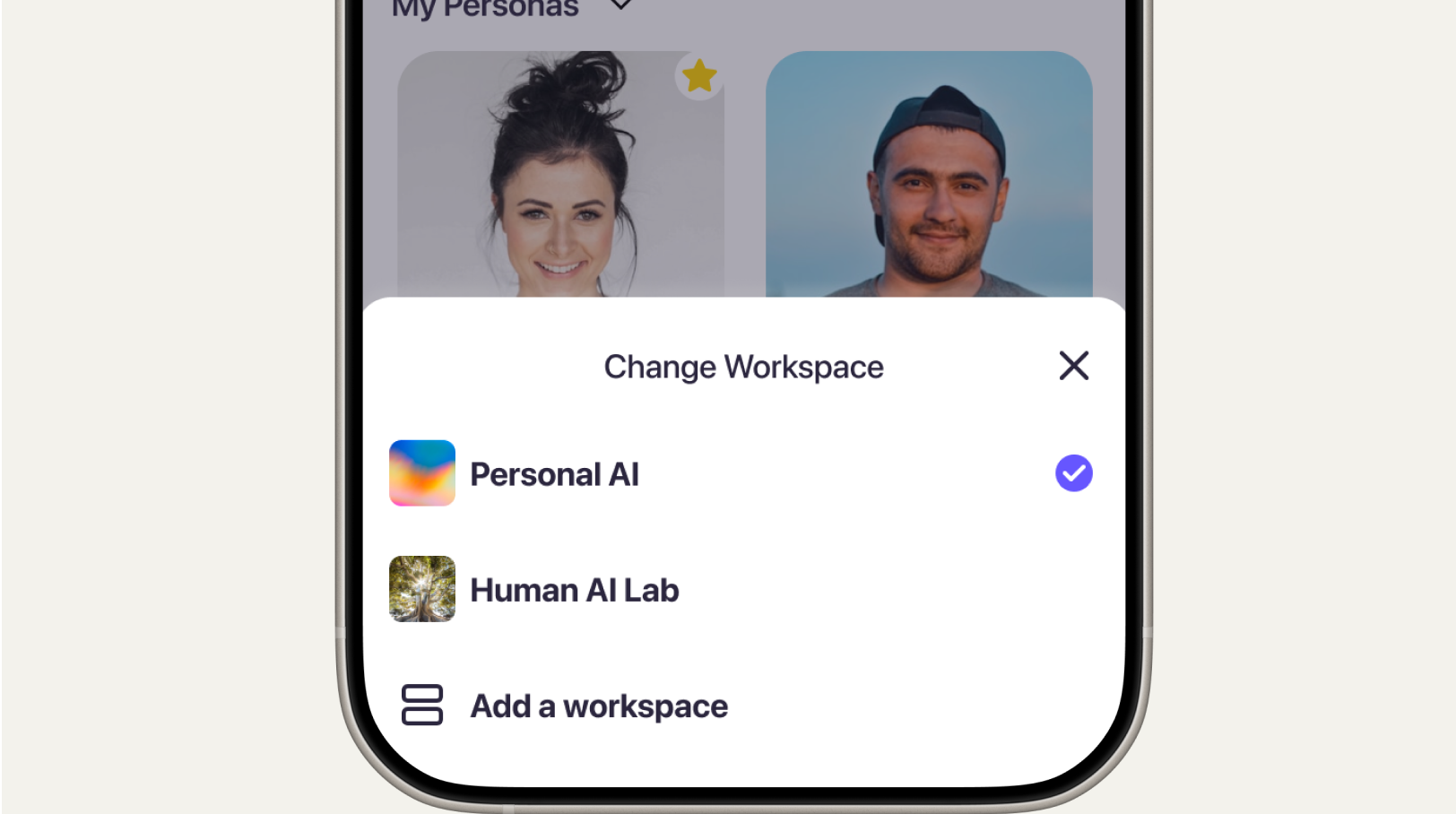
Many workspaces, one session.
In a multi-workspace environment, users switch between workspaces without logging out. The mobile switcher mirrors the web's session model so context follows the user across surfaces.
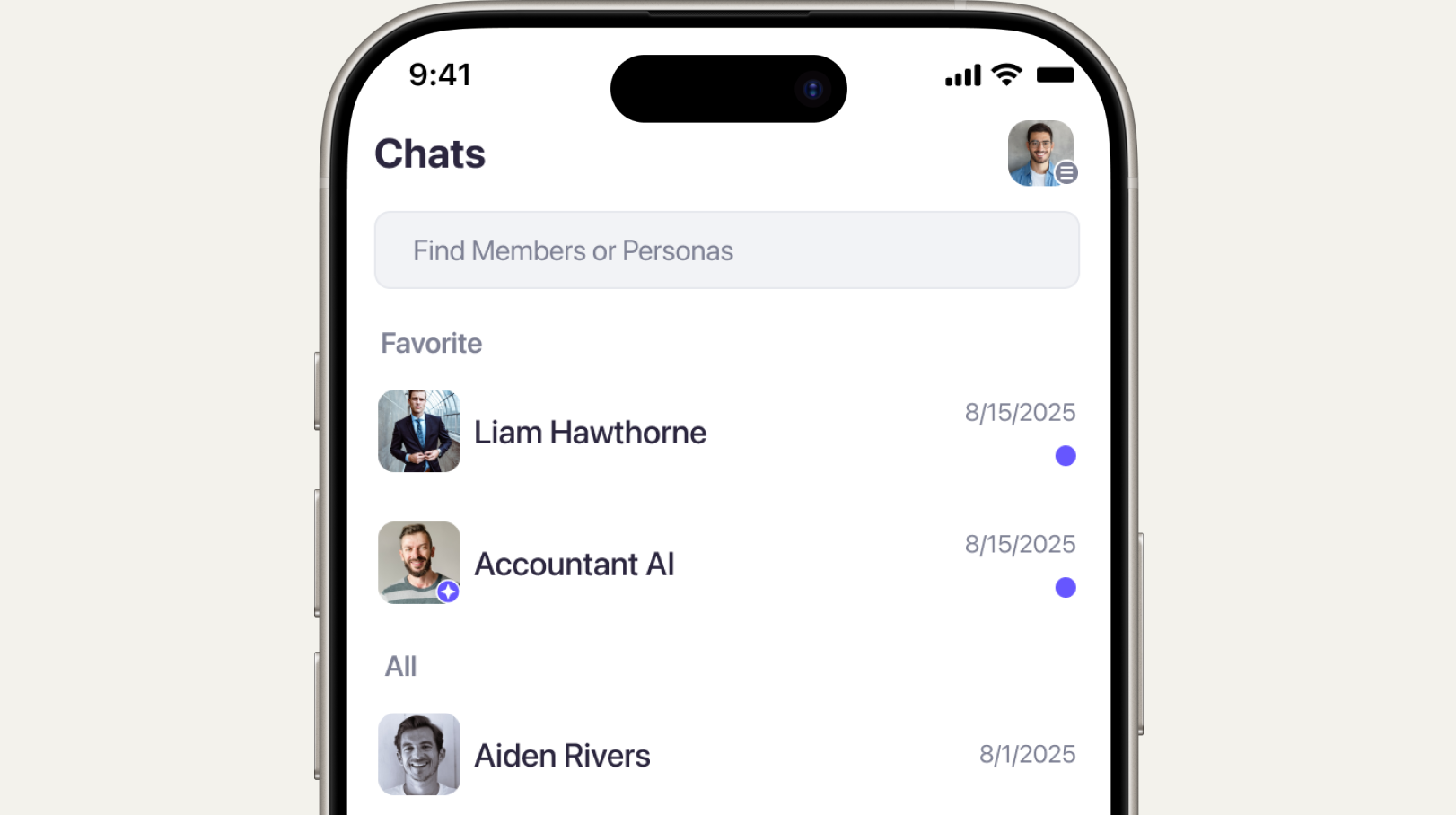
Humans and agents, in one room.
Chat shows unread notifications with timestamps and who is currently in the room — enabling conversation with both people and AI agents inside the same message thread. The AI is a participant, not a drawer.
Mention a file. Ask the agent.
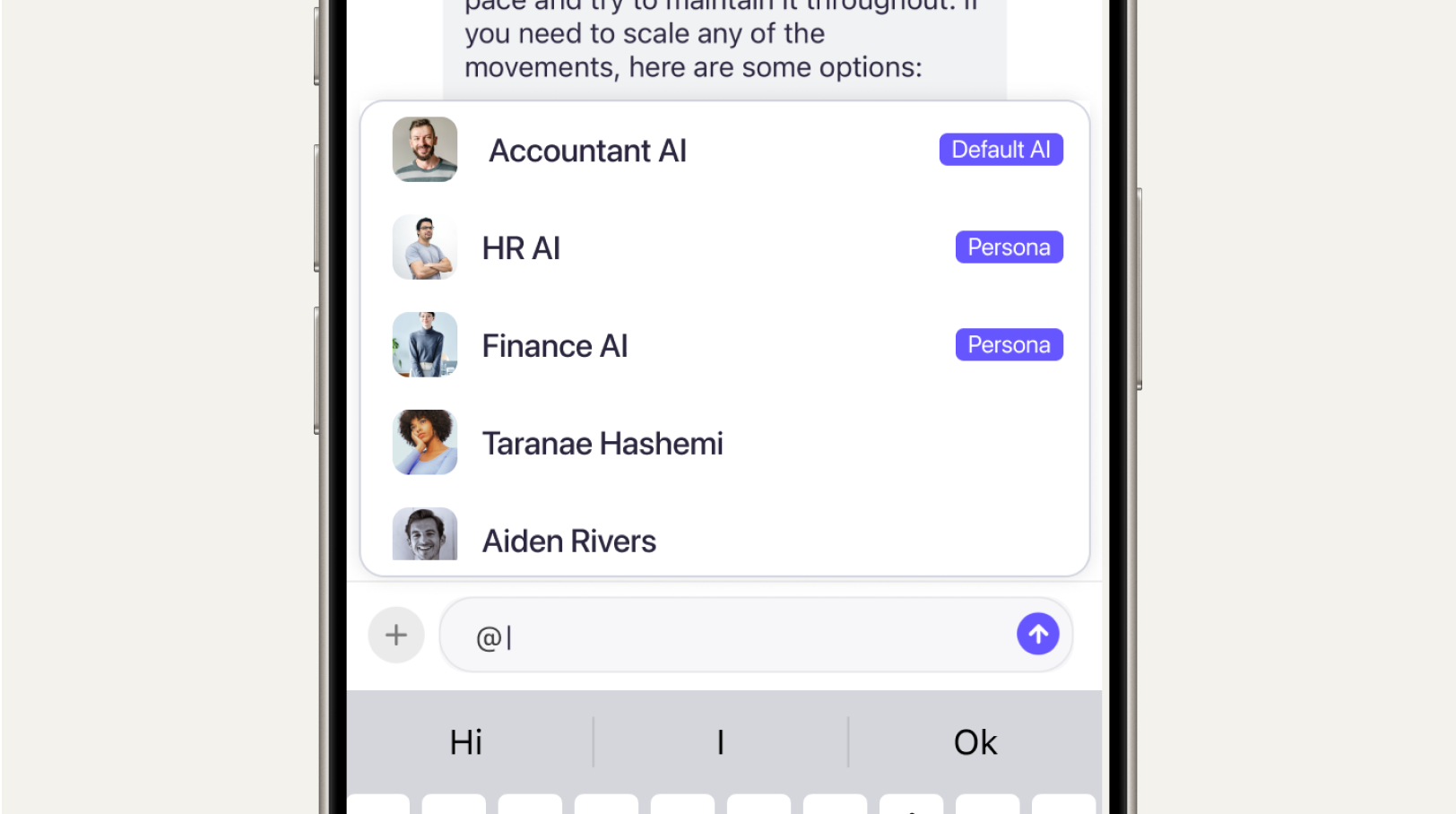
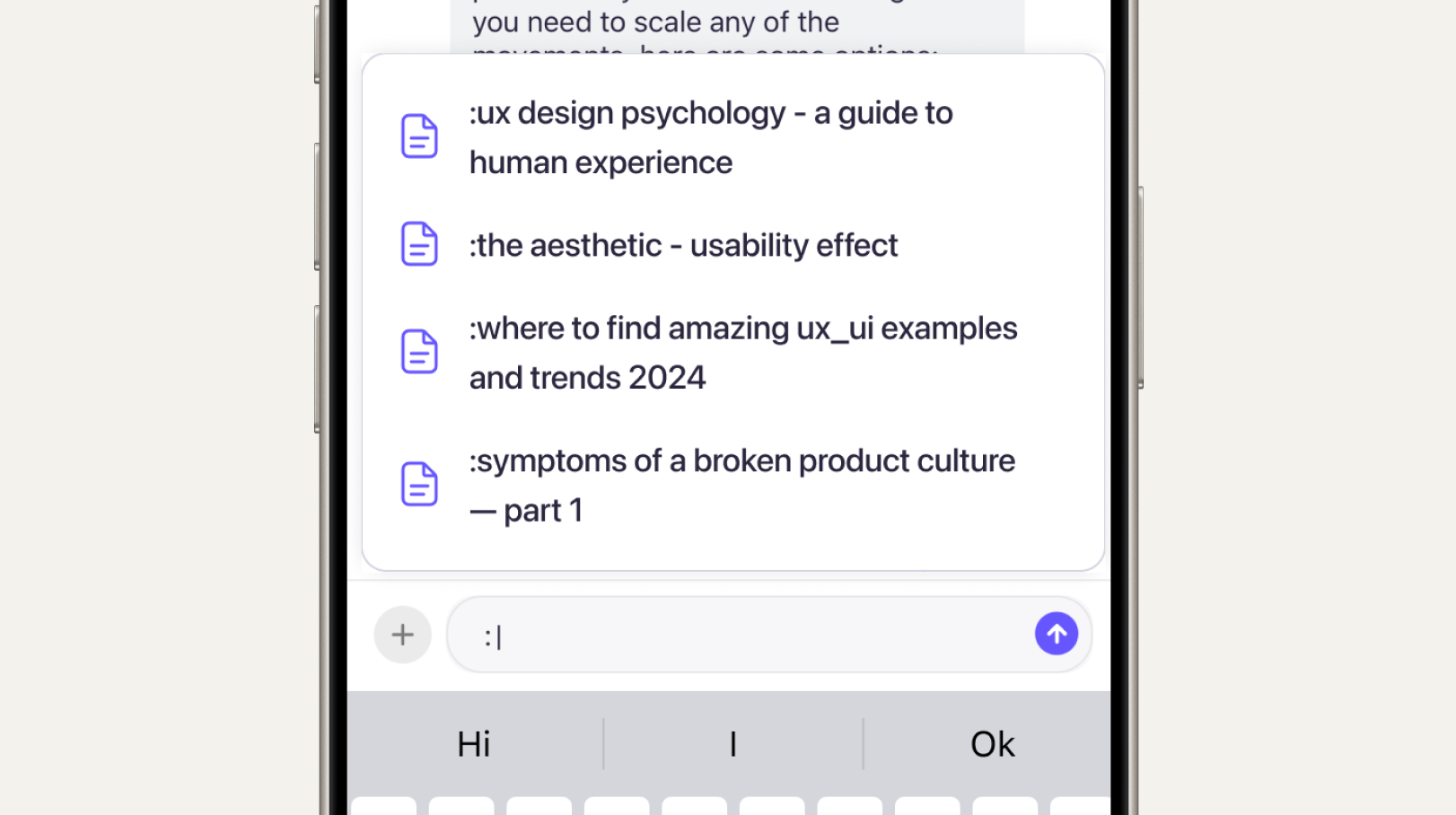
Users can @mention people, AI agents, and files directly in chat. Mentioning a file lets users ask agents questions grounded in that document — turning the inbox into an ambient workspace for enterprise tasks.
Ninety days, two platforms, one mental model.
Shipped in three months to enterprise customers. RBAC parity with the web workspace held, the chat-first model landed with early adopters, and the @file-mention pattern became the default way teams trigger agents on mobile.